Assassin s Creed Desmond Story Arc Continued in Comics
The Assassin's Creed franchise is known and loved by many for its various historical settings. Each game has told a story set during a different era, allowing players to explore times and places like ancient Egypt and Victorian London. The latest game, Assassin's Creed Valhalla, brings players to the Viking era, and as that game comes to a close after two years with the upcoming The Last Chapter update, fans are looking ahead to what's next.
The latest Ubisoft Forward had plenty of reveals and teases for upcoming Assassin's Creed games, including Codenames Red and Hexe (which will be part of the previously-announced Infinity hub) and the Netflix-exclusive Codename Jade. However, with these new games not releasing until at least 2023, now is a great opportunity for fans to revisit past entries. One interesting way to do so would be to explore the history-spanning series in chronological order based on when the games are set rather than playing them in the order they were released. Here's how to do just that.
Assassin's Creed Odyssey (431 - 404 BC)
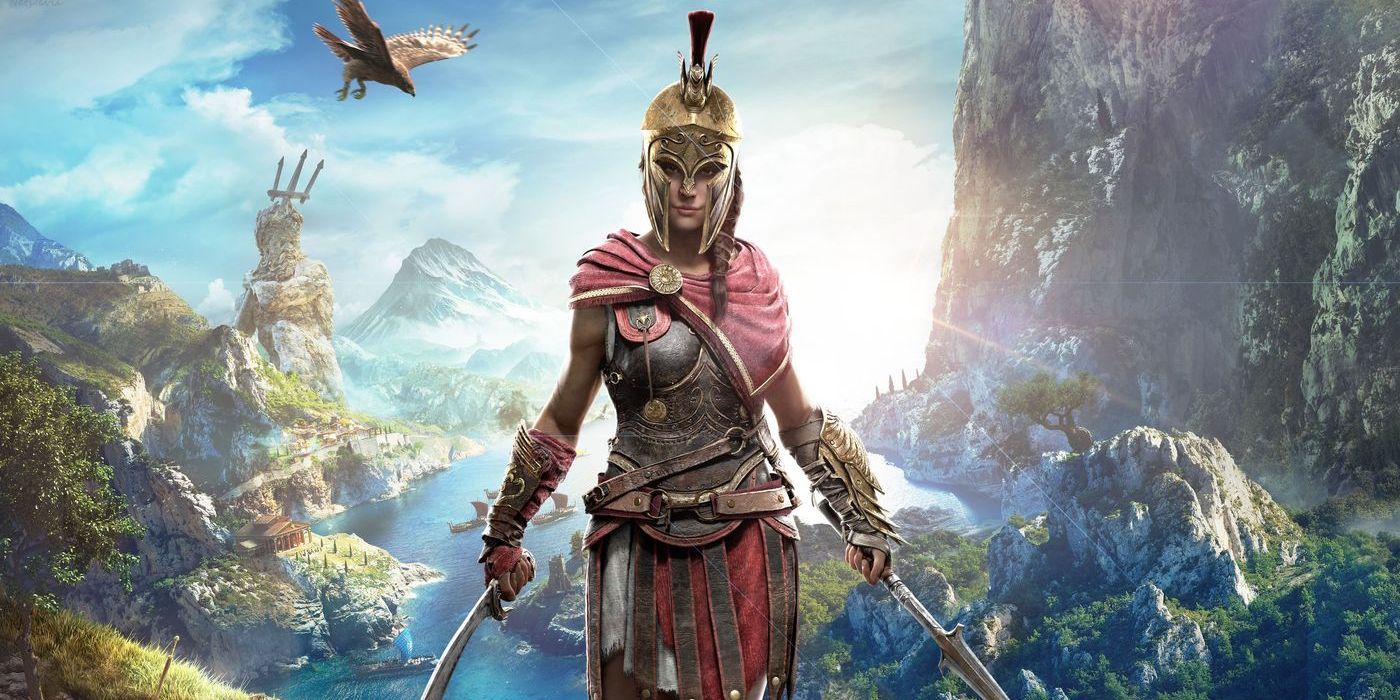
One of the newest Assassin's Creed games is the first chronologically, taking place in ancient Greece. 2018's Odyssey is a rarity in the series, as it doesn't revolve around the war between the Assassin Brotherhood and the Templar Order. Instead, it fills in the backstory of the Order, the Templars and The First Civilization, the beings that created humanity in AC lore. Like most AC games, the present-day segments set up the connective tissue between games.
Assassin's Creed Origins (49 - 43 BC)

2017's Origins goes back to the foundation of the Assassin Order in ancient Egypt, when they were known as the Hidden Ones. They battle the Templar's predecessors, the Order of the Ancients. Origins also features Assassin's Creed's most relatable protagonist in Bayek. The game also introduced a new protagonist for the modern-day segments, Layla Hassan, who would later appear in Odyssey and Valhalla.
Assassin's Creed Mirage (~850 AD)
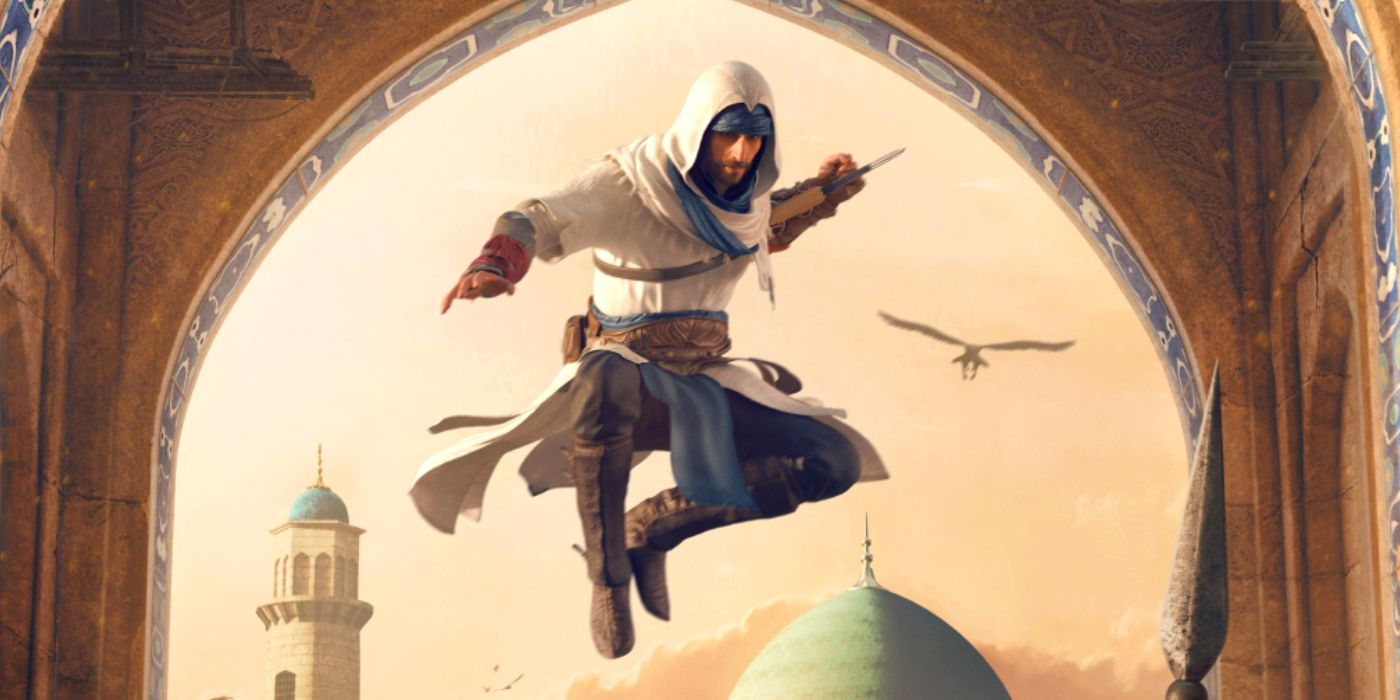
The next mainline Assassin's Creed game won't be out until some time in 2023, but we already know approximately when it takes place and how it fits into the larger franchise. Mirage will follow Basim, a fan-favorite character introduced in Valhalla, revealing his origins as he joins the Hidden Ones with no knowledge of his true nature. The game will be set in Baghdad 20 years before the events of Valhalla, placing it somewhere in the 850s AD.
Assassin's Creed Valhalla (872 - 878 AD)
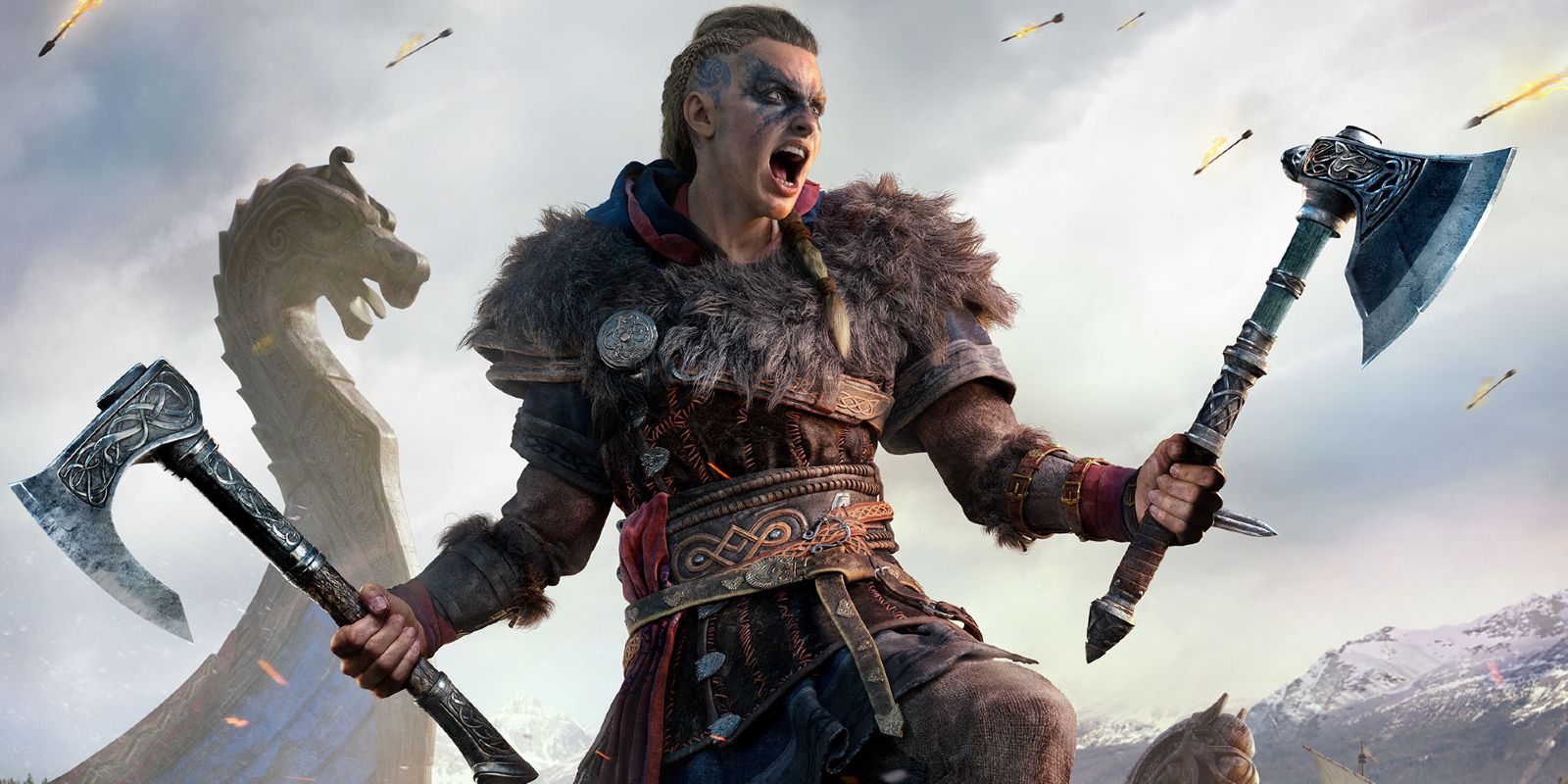
Released in 2020, Valhalla's protagonist, Eivor, assists the Hidden Ones against the Order of the Ancients. They're the rare Assassin's Creed protagonist who works alongside the Brotherhood without joining it. Valhalla added Norse Mythology to its usual mix of history and its lore, including a plot twist involving the Assassin Basim.
Assassin's Creed: Altair's Chronicles (1190 AD)
Released shortly after the first game, 2008's Altaïr's Chronicles was a Nintendo DS and mobile prequel. The story is told from Altaïr's perspective instead of Desmond Miles reliving his memories through the Animus. It sets up the plot and gameplay loop of the original by telling the story of Altaïr's failure to retrieve the Chalice from the Templars.
Assassin's Creed (1191 AD)
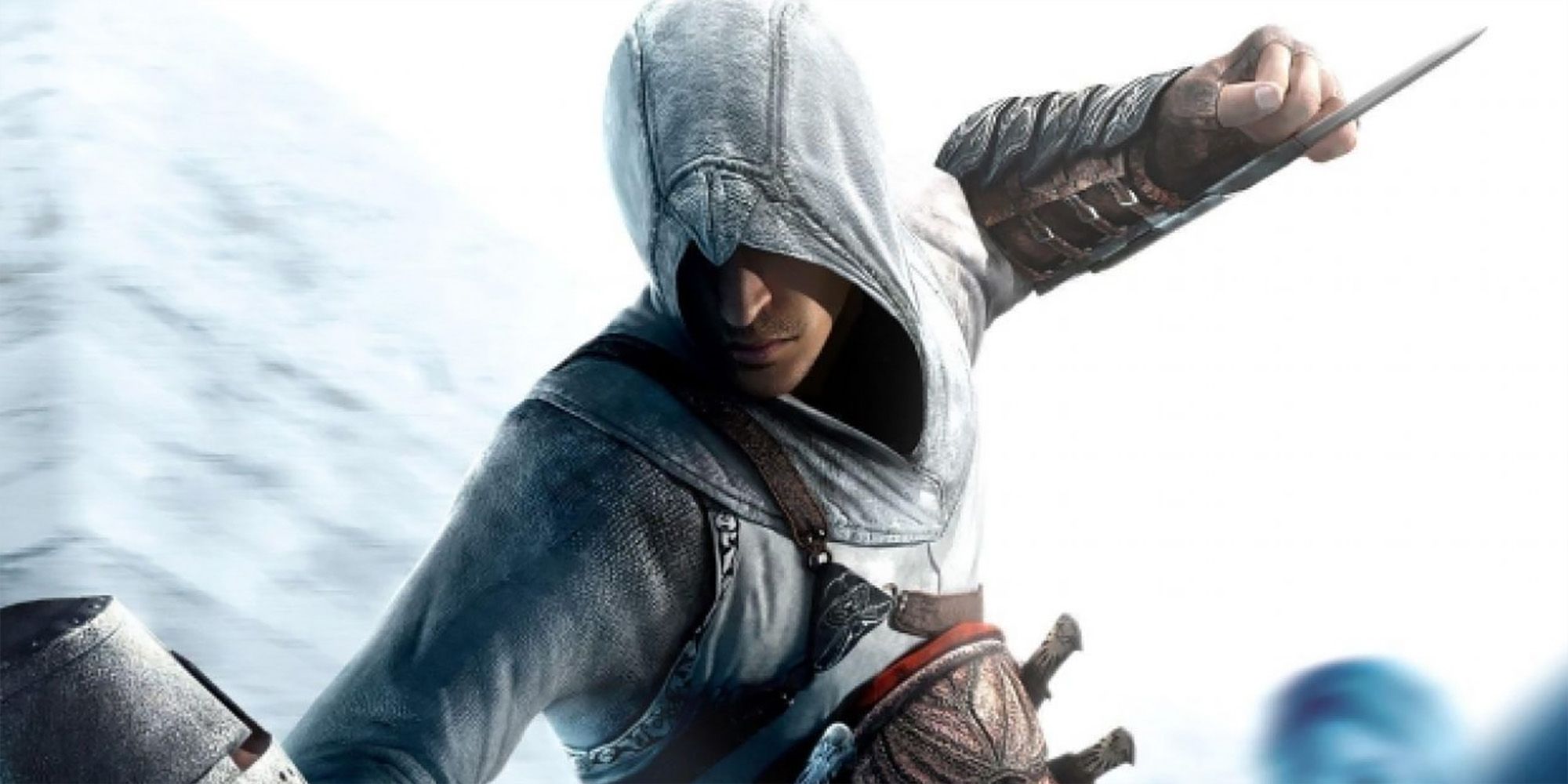
The original Assassin's Creed introduced the Assassin/Templars conflict and the Animus plot device which have carried on through the series. The first Animus subject, Desmond Miles, would appear in the next five core games' modern-day segments. Recurring series MacGuffin, the Apple of Eden, which controls minds, was also introduced here.
Assassin's Creed: Bloodlines (1191 AD)
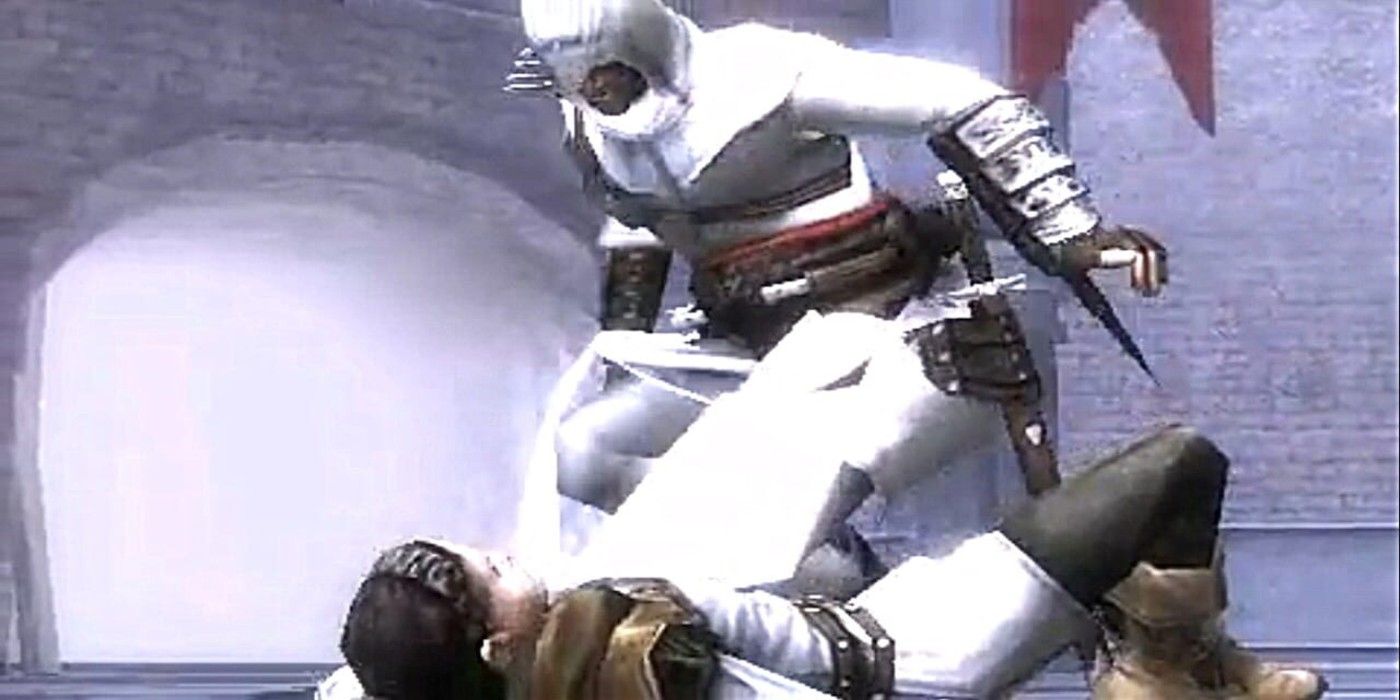
2009's Bloodlines is a PlayStation Portable exclusive that continues the first game's story, with Altaïr hunting down more Templars. It's also a love story, chronicling the relationship between Altaïr and Templar Maria Thorpe, who briefly appeared in Assassin's Creed. Bloodlines connects with Assassin's Creed II, also released in 2009 --literally. Connecting a PSP to a PlayStation 3 meant players could unlock exclusive content in one game by playing the other.
Assassin's Creed II (1476 - 1499 AD)
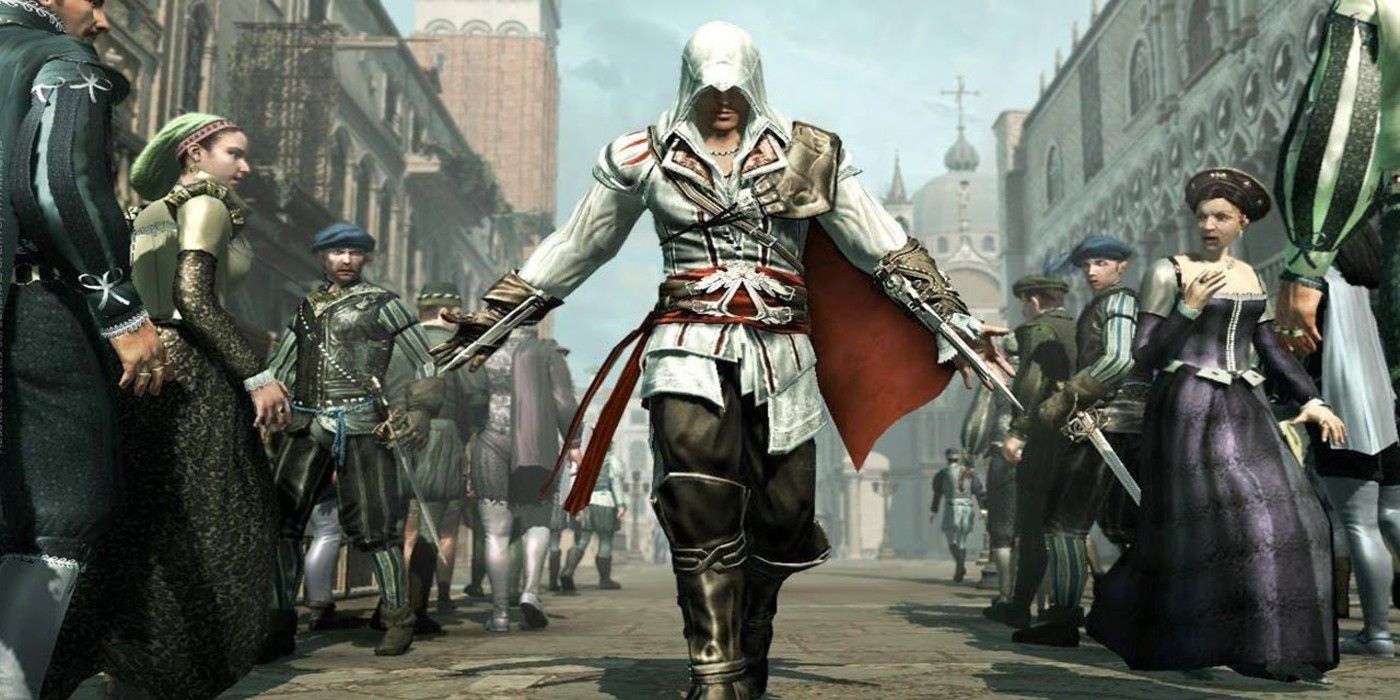
Also released in 2009, the second major game in the series introduced one of Assassin's Creed's most beloved protagonists, Ezio Auditore da Firenze. Ezio's origin story takes place in Renaissance Italy, as he joins the Brotherhood to avenge the death of his father and brother. Ezio starred in the next three core entries in the series, the most of any assassin.
Assassin's Creed II: Discovery (1491 AD)
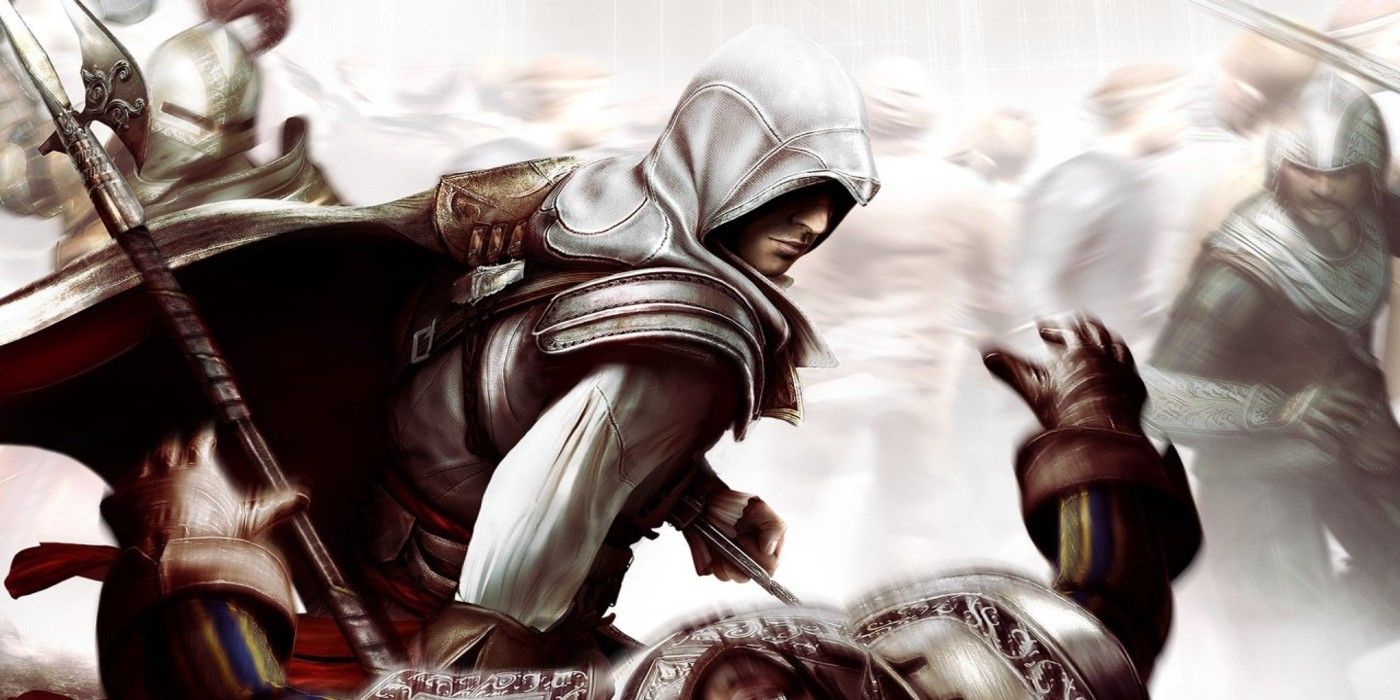
The third Assassin's Creed game released in 2009, Discovery took place between DLC chapters in AC II. Like Altair's Chronicles, it was released on the DS and mobile phones. This told a side-story that saw Ezio interact with historical figures like Christopher Columbus while assisting the Spanish Assassins Guild in their battle against the Spanish Inquisition.
Assassin's Creed Brotherhood (1499 - 1507 AD)
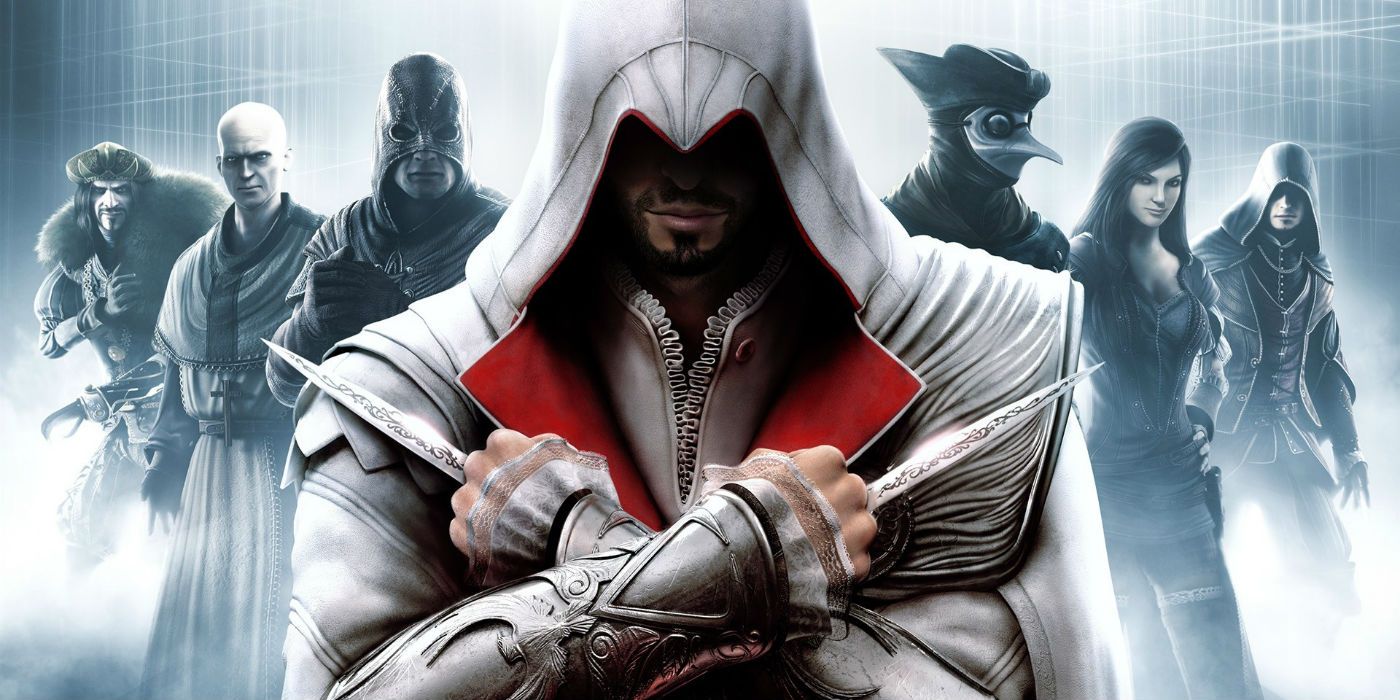
Ezio's second core outing, 2010's Brotherhood, continued his battle against the Templar aligned Borgia Family in Rome. Ezio continues to rub shoulders with historical figures like Leonardo da Vinci and Machiavelli. Desmond's role becomes larger, as he finds the Apple of Eden through Ezio's memories, leading to a shocking ending involving Lucy, the supporting character voiced by Kristen Bell.
Assassin's Creed Revelations (1511 - 1512 AD)
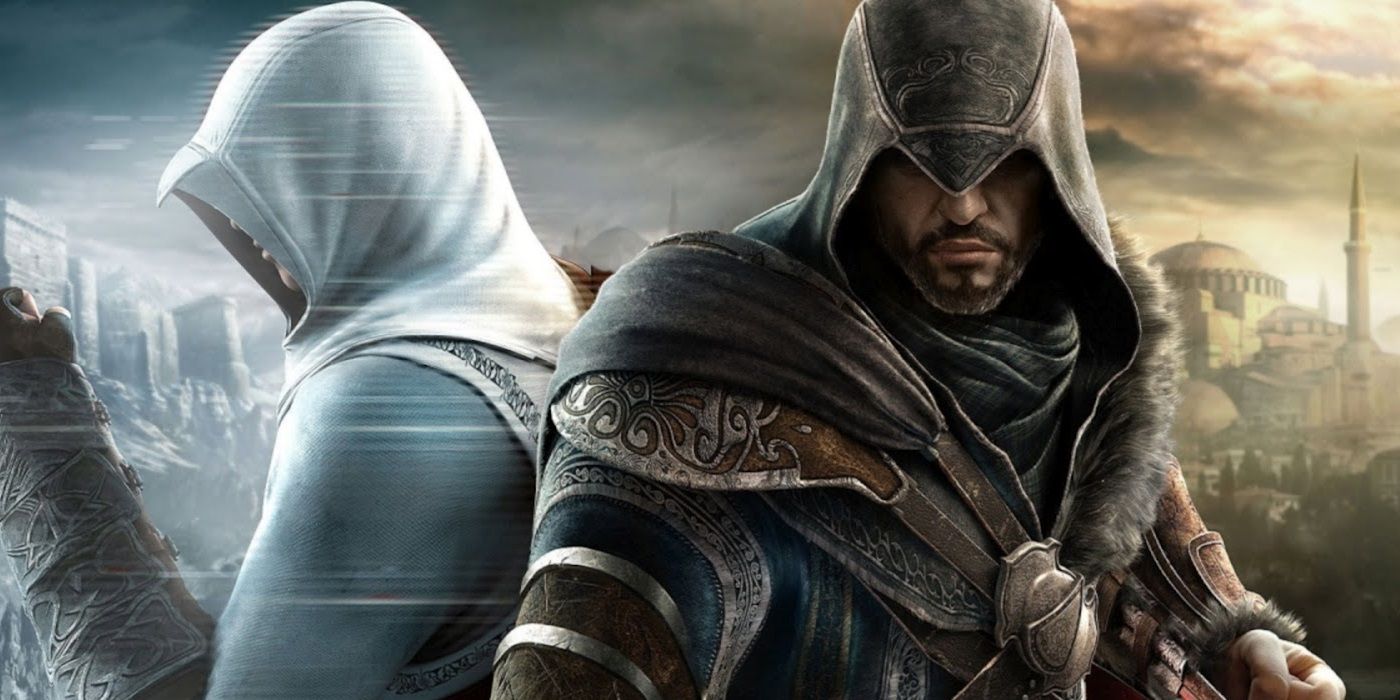
Not content with just ending Ezio's trilogy, 2011's Revelations also reveals more of Altaïr's memories. Ezio accesses them in 16th century Constantinople in an attempt to find the Apple of Eden, which was locked in Altaïr's vault, leading to a climatic scene that connects Ezio, Altaïr and Desmond. It reveals the Assassins' true purpose, making it the most important game in the franchise.
Assassin's Creed Chronicles: China (1526 AD)
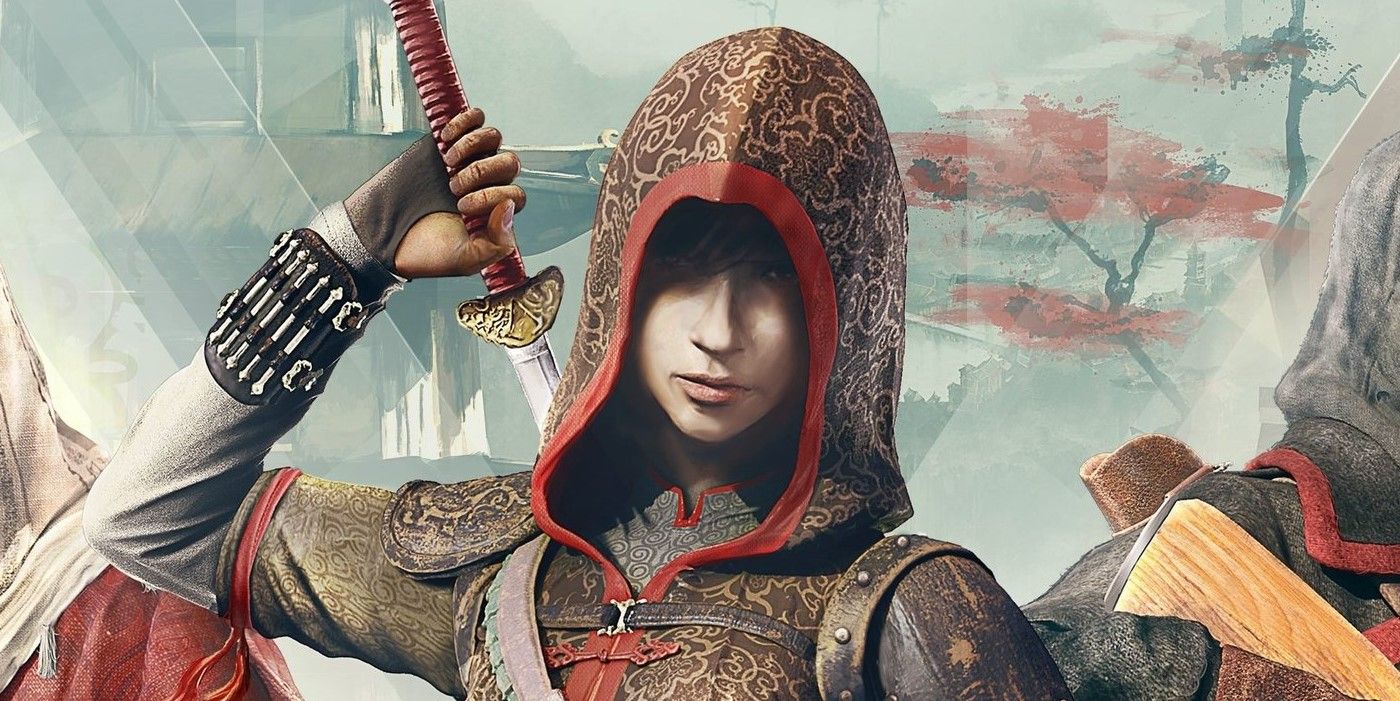
The first of a trio of side scrolling 2.5D games, 2015's China stars the underrated Shao Jun. Shao Jun was introduced in the short film Assassin's Creed: Embers, where she traveled to Italy to train with an elderly Ezio. After returning home, she sought vengeance against the Eight Tigers, the Templars that wiped out the Chinese Brotherhood.
RELATED:
Assassin's Creed IV: Black Flag (1715 - 1722 AD)
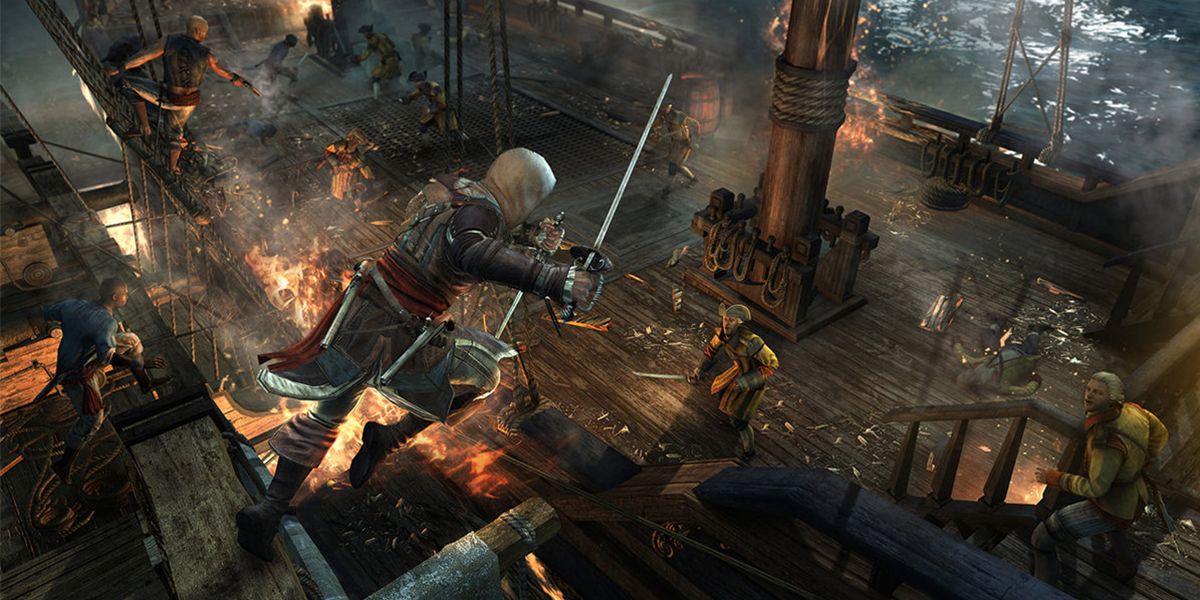
2013's Black Flag was a departure for the series beyond its focus on piracy over parkour. The first game not to feature Desmond as its Animus subject, it delved into Abstergo's attempt to re-write history to make the Templar's look heroic. Set during the 18th century Caribbean's Golden Age of Piracy, it's loosely a prequel of Assassin's Creed III. Star Edward Kenway is the father of AC III antagonist Haytham and grandfather of protagonist Conner.
Assassin's Creed Freedom Cry (1735-1737 AD)
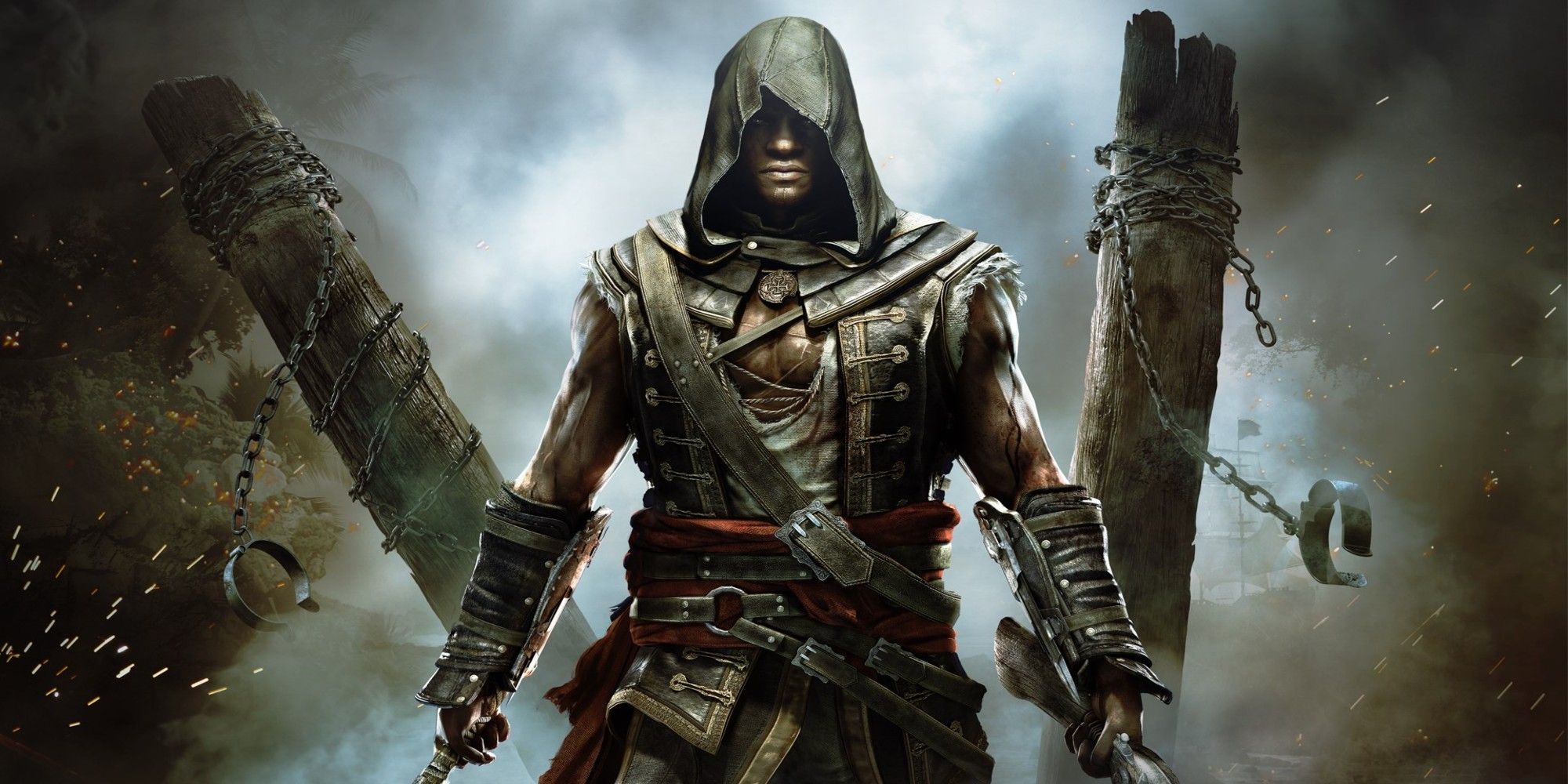
Set 20 years after Black Flag, Freedom Cry stars quartermaster turned Assassin Adéwalé. It was initially DLC for Black Flag before being released as a standalone title. Shipwrecked in Haiti, Adéwalé aligns with liberated slaves the Maroons against the slave trade, another example of the series' use of actual historical figures.
Assassin's Creed: Rogue (1752 - 1776 AD)

The series' second pirate-focused game, 2014's Rogue is set during the same time period as Assassin's Creed III. Its protagonist Shay Cormac, a former Assassin who joins the Templars, interacts with characters from multiple AC games, including 2015's Unity. This gives what could have been a loose spin-off surprisingly strong continuity.
Assassin's Creed III (1754 - 1783 AD)
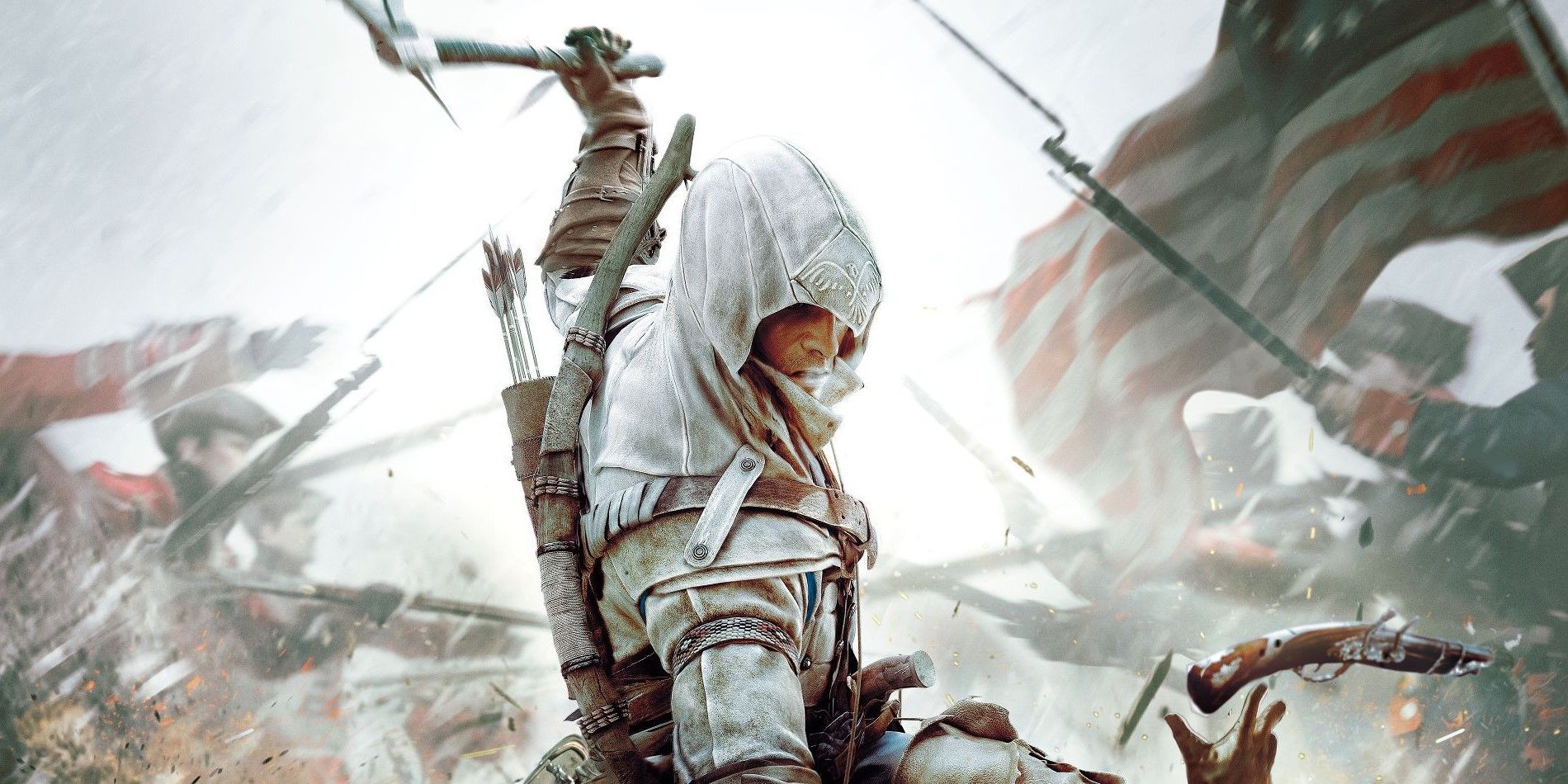
2012's Assassin's Creed III stars half-Mohawk, half-English Assassin Ratonhnhaké:ton, also known as Connor, as he fights against the Templars during the American Revolution. That includes his father Haytham, the leader of the Colonial Templars. Branching off into alternative history, the game includes a DLC where Conner fights an Apple of Eden corrupted George Washington who has made himself King of the United States. In the present day, this game also wraps up Desmond's story arc.
Assassin's Creed III: Liberation (1765 - 1777 AD)
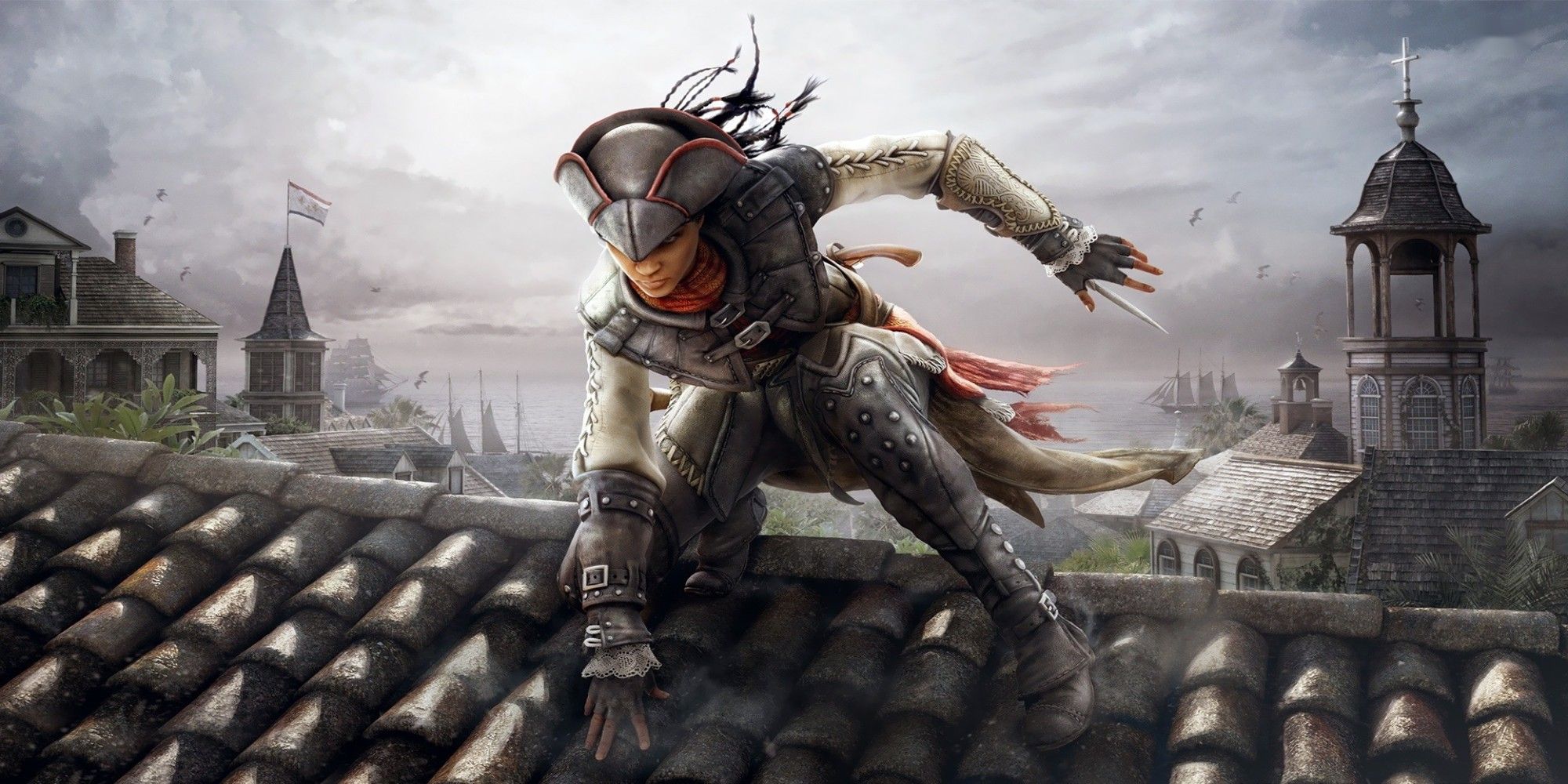
Originally released as a PlayStation Vita exclusive alongside Assassin's Creed III, Liberation stars Aveline de Grandpré, the series' first female protagonist. It takes place in New Orleans during the 18th century, as Aveline battles Templars at the end of the French and Indian War. Like Bloodlines, it was a companion game that could be linked with the PS3 version of AC III to unlock content.
Assassin's Creed Unity (1776 - 1800 AD)
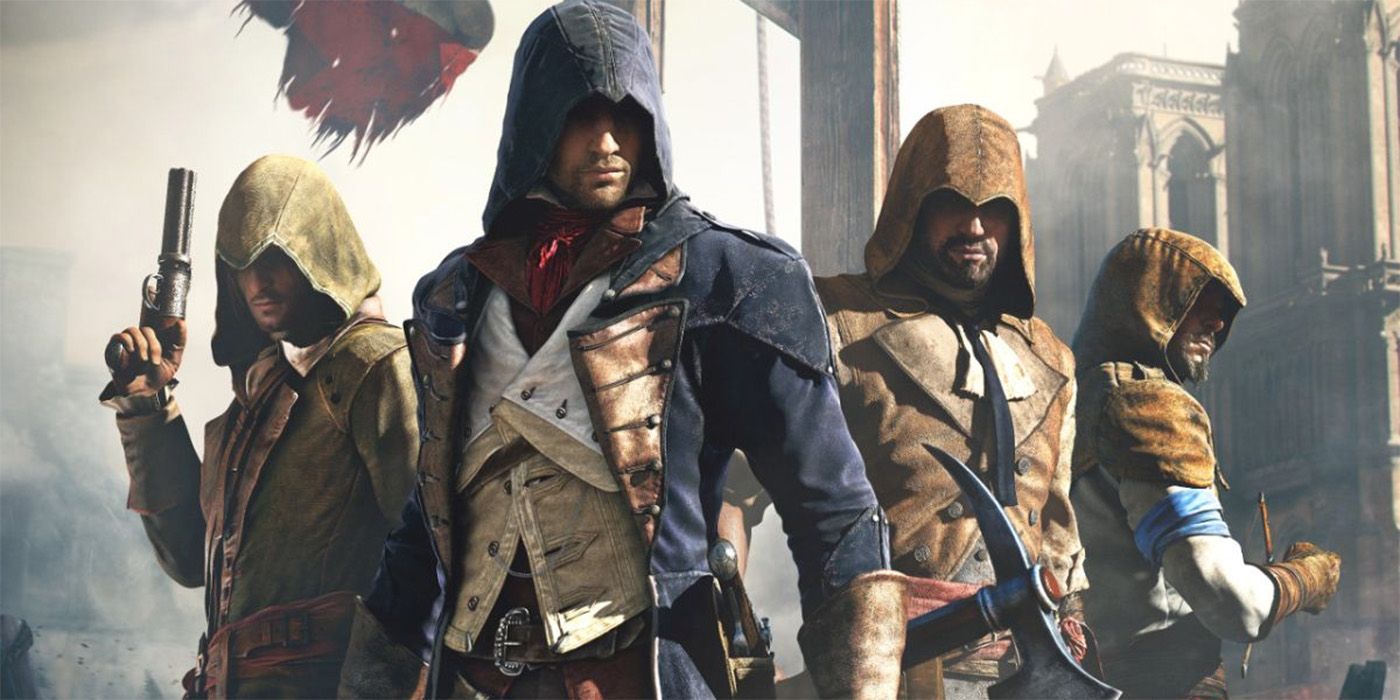
A buggy launch made 2014's Unity one of Assassin's Creed's most infamous titles, though patches have turned it into a solid entry in the series. Set place during the French Revolution, it stars nobleman Arno Dorian and focused on the Assassin/Templar war. It added a wrinkle of star-crossed love between Arno and his childhood sweetheart, Templar follower Elise. Unity also started a modern-day story that was continued in the next installment, Syndicate.
Assassin's Creed Chronicles: India (1841 AD)
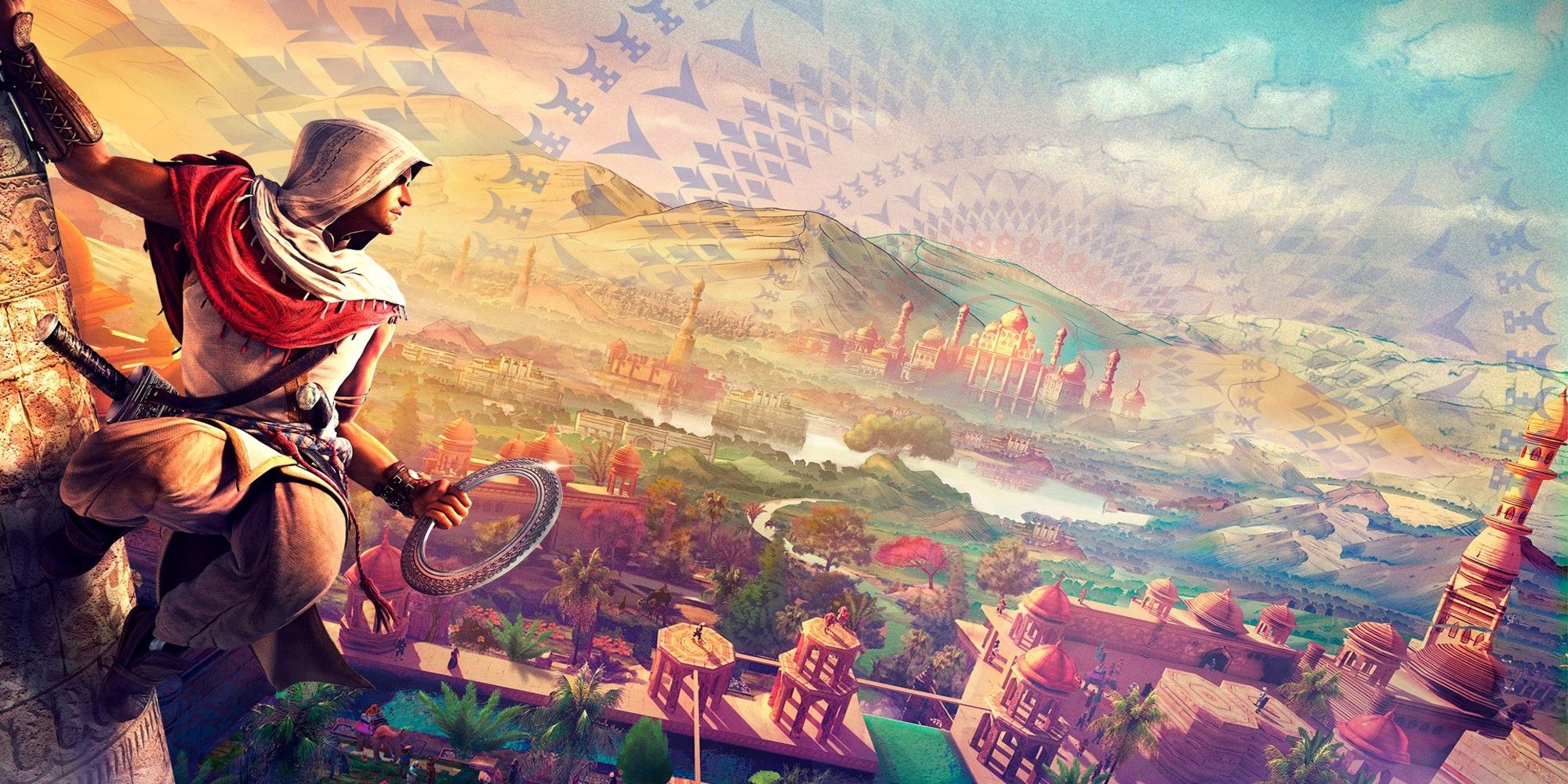
Like Shao Jun, Assassin's Creed Chronicles: India's protagonist debuted in another medium. In this case, Arbaaz Mir appeared in the graphic novel Assassin's Creed: Brahman before starring in a game. 2016's India takes place in 1841, as Arbaaz hunts a Templar Master during the war between the Sikh Empire and the East India Trading Company.
Assassin's Creed Syndicate (1868 AD)
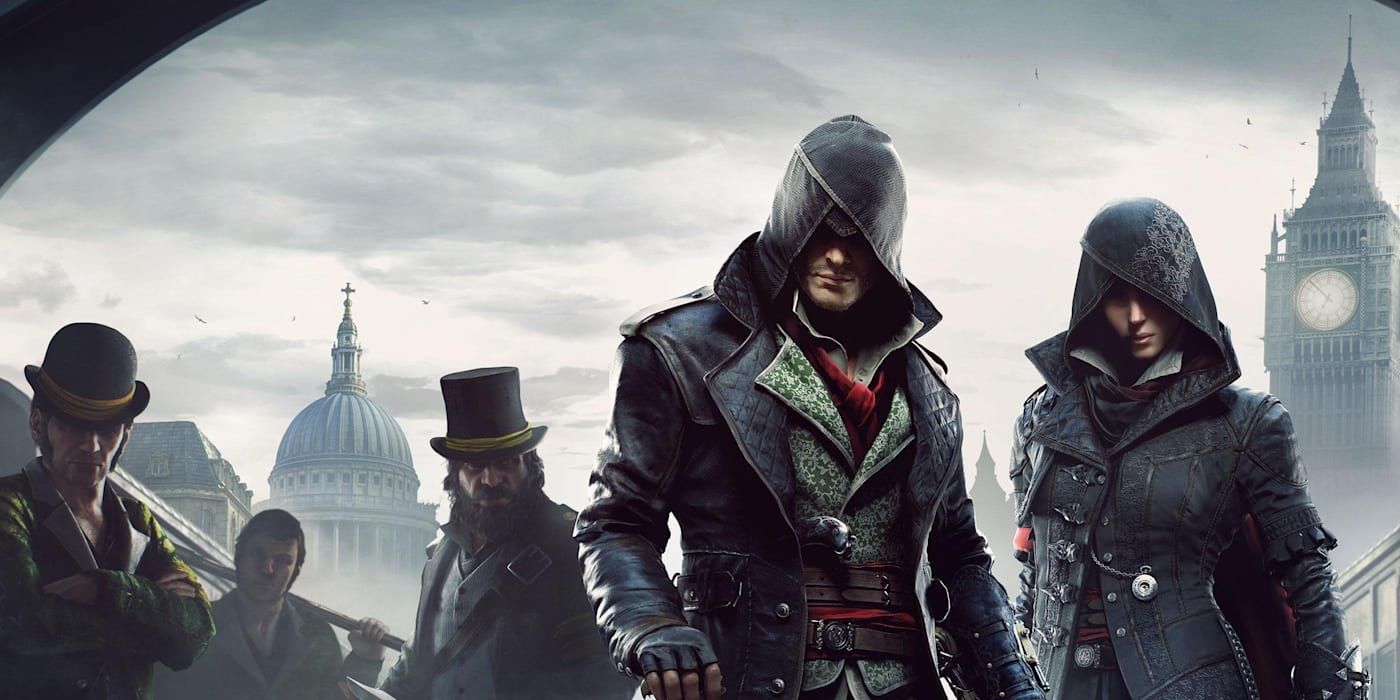
2015's Syndicate was the last Assassin's Creed game before the series made its transition from the sandbox genre to action-RPG. Six years later, it plays like a fun throwback. Set in Victorian England (and including DLC that featured Jack the Ripper and Sir Arthur Conan Doyle), the game focuses on the Frye twins' battle against the Templars.
Assassin's Creed Chronicles: Russia (1918 AD)
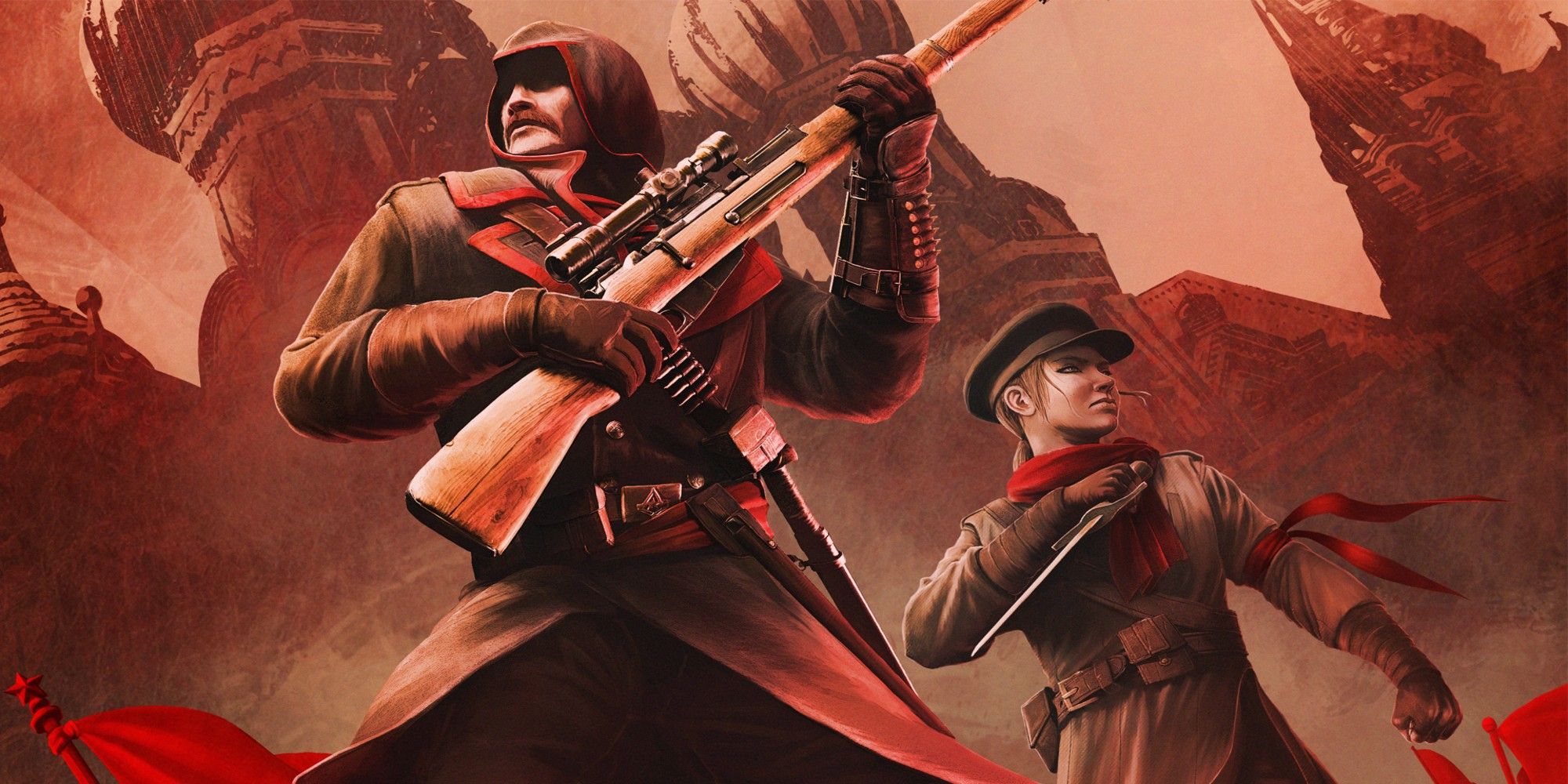
The last of the Chronicles games, and most recent in terms of Assassin's Creed's timeline, takes place in 1918 following the October Revolution. Starring another character from the comics, 2016's Chronicles: Russia also features historical figure, the Shao Jun possessed Princess Anastasia Romanova. She turns out to be a pivotal figure in AC lore, as the Assassins learned how to send people into the memories of Assassins they weren't related to via the precursor box that possessed her, something crucial to the post-Desmond games.
Source: https://www.cbr.com/assassins-creed-chronological-order/
0 Response to "Assassin s Creed Desmond Story Arc Continued in Comics"
Enregistrer un commentaire